
Hydronic System Flushing & High-Velocity Water Flushing
New hydronic piping comes out of construction carrying debris, weld slag, mill scale, cutting oils and pipe dope. Cleanhydronics flushes chilled-water, heating-water, condenser-water and closed-loop process cooling systems before startup, with temporary pumping, filtration, measured flow and the records your commissioning team needs.
Why new systems are flushed at velocity
Low-flow circulation through the permanent pumps moves water, not debris. Solids settle in low points, large mains and dead legs, then show up at startup in strainers, coils, heat exchangers and control valves. A high-velocity flush uses temporary pumping sized to the pipe, run zone by zone, to carry that material out of the system and into filtration.
Flushing velocity and acceptance criteria come from the project specification and the engineer, not one universal number. We plan the flush to meet them and measure the result. Sensitive equipment is isolated or bypassed with temporary jumpers so debris does not pass through it.
Bringing us in during buyout? See how we support mechanical contractors from preconstruction through closeout.
TEMPORARY PUMPING FILTRATION MEASURED FLOW TURNOVER RECORDS
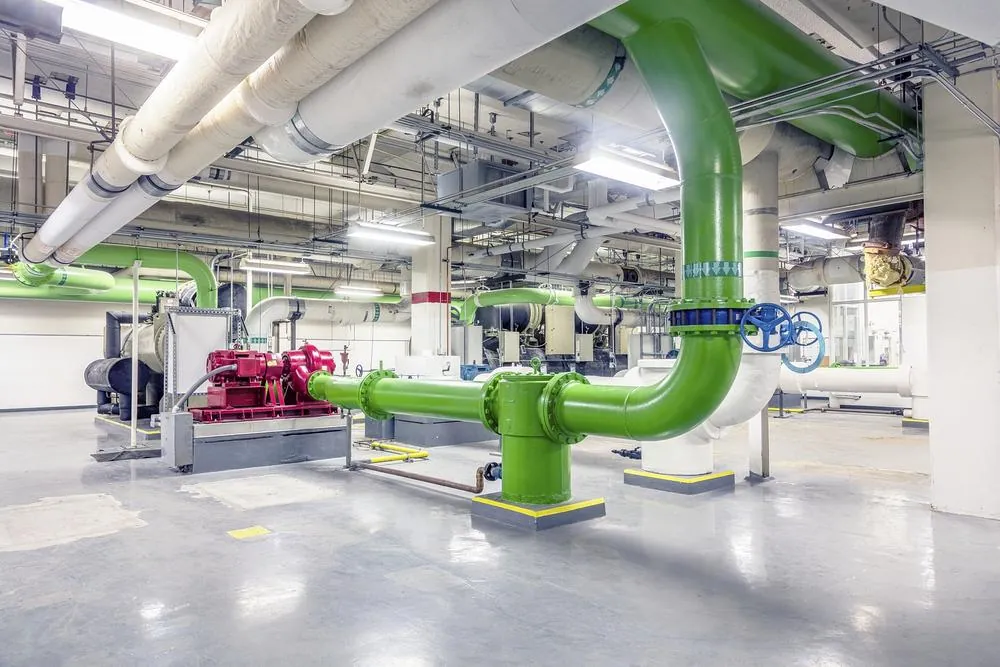
Systems we flush
Chilled-water systems
Primary and secondary chilled-water mains, risers, branches and terminal connections, with chillers, coils and heat exchangers protected during the flush.
Heating-water systems
Boiler and heating-water loops, reheat piping and terminal branches, with boilers and small-bore coils isolated or bypassed as the project requires.
Condenser-water systems
Condenser-water piping between chillers and cooling towers, with tower basins and chiller condenser bundles isolated or bypassed so construction debris stays out of them.
Closed-loop process cooling
Process and equipment cooling loops in industrial, life sciences and data center facilities, flushed to the cleanliness the equipment manufacturer and specification call for.
What we bring to the site
High-velocity flushing
Flush zones sized so the temporary pumps can reach the target velocity in each pipe size, sequenced from mains to branches.
Temporary pumping
Pumps, hoses, manifolds and connections selected from a hydraulic calculation, not guesswork, with power needs identified early.
Temporary filtration
Filtration in the flush loop to capture debris as it leaves the system, with strainer and filter checks logged throughout.
Flow verification
Measured flow at multiple points across different pipe sizes, so velocity is documented rather than assumed.
Water-quality monitoring
Field readings and visual checks against the specified acceptance criteria, with sampling support for the water-treatment specialist where required.
Documentation and turnover
Flush logs, flow readings, water-quality results, strainer and filter records, and a completion report for the turnover package.
How a flushing scope runs
We review drawings, specifications and take-offs to define system boundaries, pipe sizes, volumes and temporary connection points.
Flush zones, sequence, target velocities, equipment isolation, water supply and discharge are planned before mobilization.
Pumps, hoses, filtration and connections are set up and checked against the flushing plan.
Each zone is flushed at velocity, strainers and filters are cleared, and progress is logged zone by zone.
Flow is measured and water quality is checked against the acceptance criteria before a zone is signed off.
Final rinse, then fill with treated water under the specialist's plan, or with glycol or the specified heat-transfer fluid.
Flush records, flow data, water-quality results and the completion report are handed over for commissioning and closeout.
Flushing on a data center schedule
Large volumes, multiple buildings and loops, big-diameter mains and a commissioning date with no float. See our data center hydronic flushing capabilities.
Glycol and heat-transfer fluid systems
When the loop is specified to run on glycol or a heat-transfer fluid, the flush and the fill are planned as one sequence. See glycol and heat-transfer fluid filling.
Pricing a hydronic flush?
Send the drawings and specifications. We will review the scope and return pricing and a flushing plan. If the job is still in preconstruction, we can help build the flushing allowance.