
Chemical Cleaning for New Hydronic and Closed-Loop Piping Systems
When the specification calls for it, Cleanhydronics chemically cleans new hydronic and closed-loop piping before commissioning. We set up temporary circulation, run the approved cleaning chemistry, rinse, verify water quality and hand over the records, coordinated with the flush and the final fill.
Why chemical cleaning may be specified on a new piping system
A water flush removes loose debris. It does not reliably remove the oil films, cutting fluids, pipe dope and other residues left on the pipe wall during fabrication and installation, or light corrosion that forms while piping sits wet or partly filled during construction. Left in place, those residues can foul heat-transfer surfaces and make it hard to establish the water-quality baseline the water-treatment program needs.
Not every system needs it. Whether chemical cleaning is required, and how it is done, depends on the system metallurgy, the contamination present, the project specification, the water-treatment requirements and the chemistry approved for the job. There is no single recipe that fits every system.
Chemical cleaning usually follows a mechanical flush. See hydronic system flushing.
APPROVED CHEMISTRY CONTROLLED CIRCULATION RINSE & VERIFY TURNOVER RECORDS
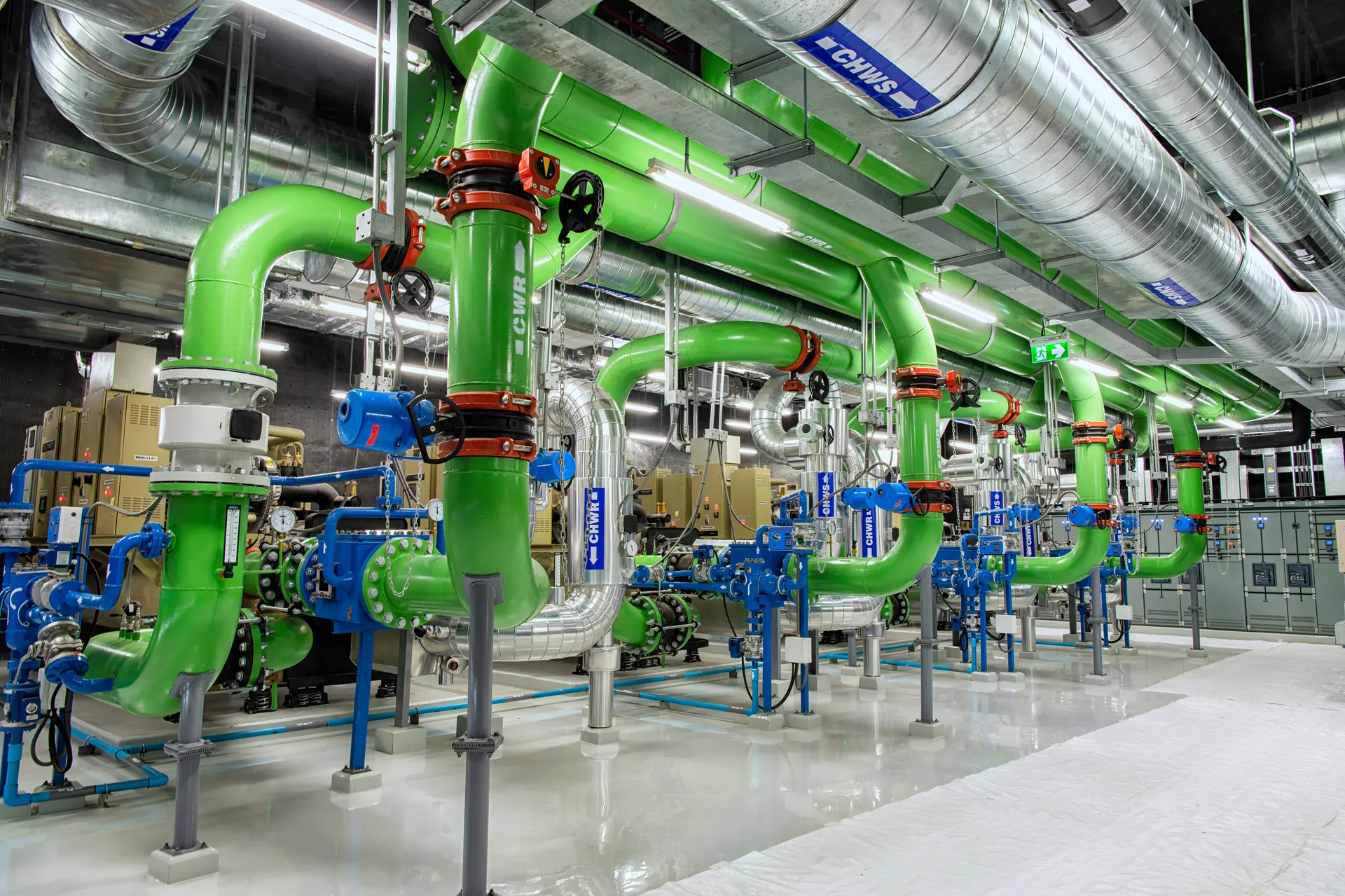
Systems and conditions we support
New hydronic piping systems
New construction and expansions where the specification requires cleaning before the system is filled and turned over.
Chilled-water systems
Chilled-water mains, risers and branches, with chillers, coils and heat exchangers isolated or bypassed as the cleaning plan requires.
Heating-water systems
Heating-water loops and terminal branches, with boilers and sensitive components protected during circulation.
Closed-loop process cooling
Process and equipment cooling loops in industrial, life sciences and data center facilities, cleaned to the equipment manufacturer's and the specification's requirements.
Construction debris and residues
Fine solids and residues that remain after flushing, including material held in films on the pipe wall.
Fabrication oils and residues
Cutting oils, preservative coatings, thread sealant and flux left from fabrication and installation.
Corrosion products, where applicable
Light corrosion that forms during construction, addressed when the specification and system materials call for it.
What the cleaning scope can include
Temporary pumping and circulation
Pumps, hoses, manifolds and connections set up to circulate through the defined cleaning boundaries, with equipment isolated as planned.
Chemical circulation
The approved cleaning chemistry is received, handled, added and circulated under control, with readings logged during the cycle.
Rinsing and neutralization
Rinsing to remove the cleaning solution, with neutralization where the approved procedure requires it.
Water-quality monitoring
Field readings and sampling against the acceptance requirements agreed for the project, with sampling support for the water-treatment specialist where required.
Waste and discharge planning
Discharge routes, approvals, containment and haul-off planned with the contractor and owner before any chemistry arrives on site.
Final flush, fill and turnover
Final flushing, system filling when included in scope, and the records your commissioning team needs for turnover.
How a chemical-cleaning scope runs
Review drawings, specifications and system materials.
Define cleaning boundaries, equipment isolation and the cleaning requirements for each system.
Establish the temporary pumping and circulation setup.
Circulate the approved cleaning chemistry and log readings through the cycle.
Rinse the system, and neutralize where the approved procedure requires it.
Verify water quality against the agreed acceptance requirements.
Complete the final flush, fill and turnover documentation as included in scope.
Flushing, chemical cleaning and final fill
The flush removes loose debris. Chemical cleaning removes what the flush leaves on the pipe wall. The final flush clears the cleaning solution, and the system is then filled with treated water under the water-treatment specialist's plan, or with glycol or the specified heat-transfer fluid. Planned together, the steps happen in the right order with one party responsible for the system in between.
The cleaning chemistry is approved for the project. Water-treatment chemistry is selected and supplied by the specialist. Each keeps its own scope, price and deliverables. On data center projects, all three are planned as one sequence against the commissioning date. Still in buyout? See how we support mechanical contractors.
Chemical cleaning in your specification?
Send the drawings and specifications, including the cleaning section. We will review the scope and system materials and return pricing and a cleaning plan.